Can You Microwave Aluminium Foil? What You Need to Know Before Trying It
Introduction
You’ve just wrapped up dinner, and there’s a portion of roast chicken sitting on a plate, still covered in the foil you used to keep it warm. Tomorrow at lunch, that foil is still there, and the plate is going straight into the microwave — foil and all — unless you stop and think twice. It’s a moment almost everyone has faced: standing in front of the microwave, foil-wrapped food in hand, wondering whether this is actually a problem or just something people repeat out of habit.
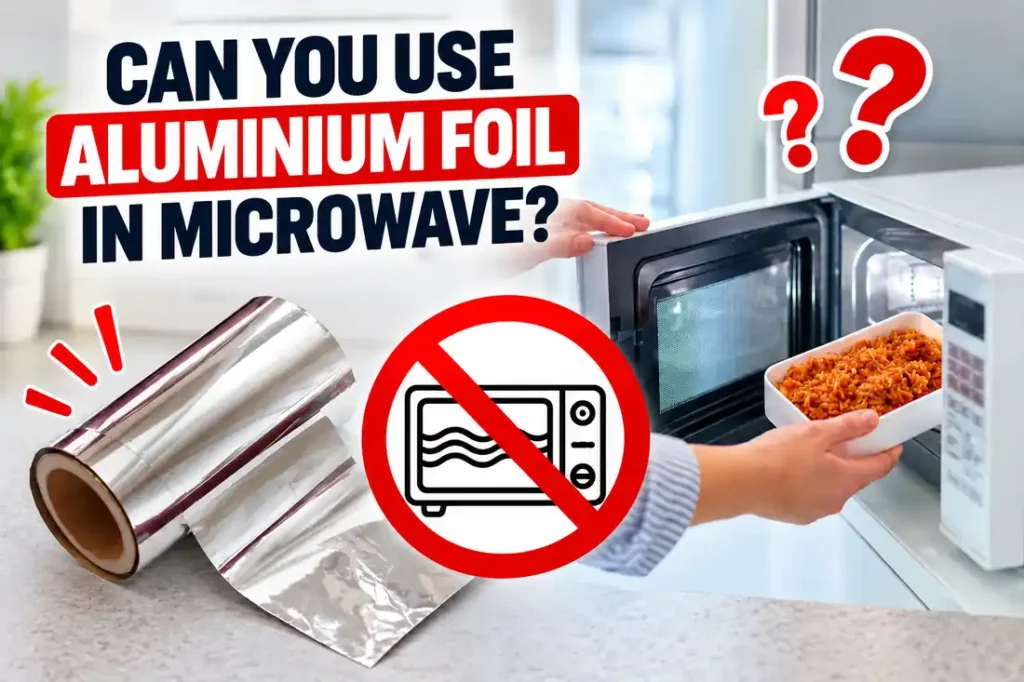
So, can you microwave aluminium foil? The short answer is that it’s generally not recommended, and most microwave manufacturers explicitly advise against it. Foil can cause sparking inside the microwave cavity, and in some cases that sparking can damage the appliance or, less commonly, start a small fire. That said, the full picture is more nuanced than a flat “never,” and understanding why foil behaves the way it does will help you make sensible decisions in the kitchen rather than just following a rule you don’t fully understand.
This article walks through what actually happens when aluminium foil meets microwave energy, why sparking occurs, whether there are any situations where limited foil use is considered acceptable, and what you should reach for instead when you need to cover or wrap food. By the end, the answer to can you microwave aluminium foil should feel less like a rule you’re taking on faith and more like something you actually understand.
Can You Microwave Aluminium Foil?
As a general rule, no — aluminium foil in microwave ovens is something most appliance manufacturers and food safety authorities advise against, and it’s a sensible default to follow unless your specific microwave’s manual says otherwise.
The reasoning isn’t about foil being flammable in the way paper is. Aluminium doesn’t catch fire from microwave energy the way a dry paper towel might. The concern is electrical, not combustible, in nature. Foil is a thin sheet of metal, and metal responds to the energy inside a microwave in a completely different way than food, glass, or ceramic does. That difference is what creates the risk of sparking, and sparking is what can, in certain conditions, lead to scorching, damage to the microwave’s interior, or a small fire if something flammable happens to be nearby.
Whether people phrase it as “can foil go in the microwave” or ask about aluminium specifically, it helps to separate two different questions that often get blurred together:
- Will foil definitely spark or catch fire every single time it goes in a microwave?
- Is putting foil in a microwave a genuinely risky habit that’s better avoided?
The answer to the first question is no — plenty of people have microwaved foil-wrapped food without any visible problem, particularly with smooth, flat pieces used briefly. The answer to the second question is yes, because the outcome isn’t predictable or consistent, and the conditions that trigger sparking aren’t always obvious to someone standing in a kitchen. That unpredictability is exactly why the general advice stays cautious rather than permissive.
What Happens When Aluminium Foil Goes in a Microwave?
To really answer can you microwave aluminium foil, it helps to know, in simple terms, what a microwave actually does. Inside the appliance, a component generates rapidly oscillating electromagnetic energy, and this energy fills the cooking chamber. When it reaches food, it causes water molecules inside the food to vibrate, and that vibration produces heat. That’s the entire trick behind microwave cooking — moving energy into food through vibration rather than direct flame or a hot surface.
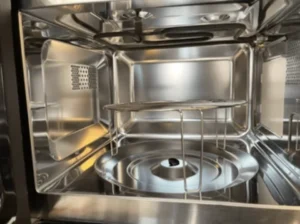
Metal interacts with that same energy in an entirely different way. Rather than absorbing it and converting it into heat the way food does, a solid, smooth piece of metal mostly reflects the energy back into the cavity. This is actually why the inside walls of every microwave are lined with metal in the first place — that metal lining reflects energy around the chamber and keeps it contained rather than letting it escape, similar to how a mirror bounces light rather than absorbing it.
Thin aluminium foil is a different story, because it isn’t a solid, uniform slab like the microwave’s interior wall. It’s a delicate sheet, easily bent, folded, and crumpled, often with sharp corners or narrow points sticking out. When the oscillating energy inside the microwave reaches these thin, irregular sections of foil, electrical charge can build up faster than it can spread out evenly across the sheet. Once that buildup becomes intense enough at a sharp point or edge, it can jump through the air as a visible spark, sometimes called arcing.
What you might actually see, if foil sparks in a microwave, includes:
- Small blue-white flashes or crackling near a folded edge or corner of the foil
- A scorch mark developing on the foil itself or on nearby surfaces
- In more sustained cases, a tiny flame if the sparking continues near something combustible
None of this means an explosion is guaranteed, and it’s worth being clear that foil doesn’t detonate the way that phrase might suggest. The realistic risk is localized sparking that, left unchecked, can scorch material or, in rarer situations, ignite something nearby. This is really the core of what people are asking when they wonder, can you microwave aluminium foil without something going wrong.
Why Does Aluminium Foil Spark in a Microwave?
The spark itself comes down to how electricity behaves at sharp points and thin edges. Here’s a simple way to picture it: imagine a wide, calm river suddenly narrowing into a tight, rocky gap. Water that flowed smoothly through the open section suddenly gets forced through a much narrower space, and it speeds up and becomes turbulent right at that pinch point. Electrical charge moving across a sheet of foil behaves in a loosely similar way — when it reaches a sharp corner, thin strip, or crumpled fold, the charge gets concentrated into a much smaller area than it was spread across a moment earlier.
When that concentrated charge becomes intense enough, it can leap through the air toward the nearest conductive surface — another piece of metal, the microwave’s interior wall, or even another sharp point on the same piece of foil. That jump is the spark you see. It’s essentially a small, localized electrical discharge, similar in principle to the static shock you might feel after shuffling across a carpet, except driven by the oscillating energy field inside the microwave rather than friction.
Several factors influence whether this actually happens, and they’re the real determinants behind can you microwave aluminium foil in any given situation:
- Shape and edges. Sharp points, thin strips, and jagged edges concentrate charge more than smooth, rounded surfaces do, which is part of why foil sparking in microwave ovens is more associated with crumpled or torn pieces than flat, smooth sheets.
- Folds and creases. Every fold in foil creates additional edges and points, multiplying the number of places where charge can concentrate.
- Distance from the microwave’s walls. Foil placed close to or touching the metal interior of the microwave gives sparks a shorter, easier path to jump.
- Amount and thickness of foil. A single small, flat piece behaves differently than a large, crumpled ball or multiple loose pieces bunched together.
- The individual microwave. Power level, the design of the cavity, and how energy is distributed inside vary between models, which is part of why one person’s experience with foil won’t necessarily match another’s.
This is also why smooth foil sometimes seems to “get away with it” while crumpled foil is far more likely to spark. Flat, unbroken foil gives the electrical charge fewer sharp points to concentrate at. It’s still not something that’s advised, but it explains the inconsistency people often notice when they ask friends or family whether you can microwave aluminium foil and get conflicting answers.
Is It Ever Safe to Use Aluminium Foil in a Microwave?
This is where nuance matters, and it’s important not to oversimplify the answer to can you microwave aluminium foil under any circumstances. General safety guidance for the average household microwave leans firmly toward avoiding foil altogether. However, a small number of microwave manufacturers, particularly for certain combination microwave-and-convection ovens, do provide specific instructions permitting limited, careful foil use in particular circumstances — for example, using a small, flat piece to shield a specific area of food from overcooking during a longer cooking cycle.
The key word there is specific. When a manufacturer allows foil use, that guidance is:
- Tied to that exact model and its manual
- Usually limited to small, flat, smooth pieces positioned away from the interior walls
- Not a general endorsement that applies to every microwave on the market
If your microwave’s manual doesn’t mention foil at all, or explicitly advises against it, that instruction should take priority over general commentary you might read online, including this article. Manufacturer guidance reflects the actual engineering of that specific appliance — how its energy is distributed, where its walls sit, and how it’s been tested — and it’s simply more reliable for your situation than a universal rule ever could be.
If you’re ever unsure, the safest approach is to treat foil as off-limits unless you’ve checked your own microwave’s documentation and found guidance that says otherwise. In other words, whether you personally can microwave aluminium foil comes down to what your specific appliance’s manual says, not what worked for someone else’s microwave.
What Types of Aluminium Foil Are Most Risky?
Not all foil situations carry the same level of risk, and the answer to can you microwave aluminium foil safely often hinges on the foil’s exact shape and condition. Based on how sparking actually occurs, certain forms of foil are more likely to cause a problem than others.
Crumpled or balled-up foil is among the riskiest, since crumpling creates dozens of sharp points and folds in a small area, giving electrical charge many places to concentrate at once.
Torn or jagged foil edges behave similarly to crumpled foil, since tears rarely leave a clean, smooth line and instead create small irregular points along the edge.
Foil touching the microwave’s interior walls is particularly risky, because it shortens the distance a spark needs to travel and increases the odds of a visible arc.
Foil formed into thin strips or twisted shapes, such as leftover strips used to secure a wrapped item, concentrates charge along their narrow length.
Multiple loose pieces of foil placed close together can also spark between each other, not just between the foil and the microwave’s walls.
By contrast, a single flat, smooth sheet lying loosely on a plate, without touching the walls, is generally considered less likely to spark than any of the situations above — though “less likely” is not the same as “guaranteed safe,” which is why general advice still leans toward avoiding it. Knowing these distinctions is genuinely useful if you’re trying to figure out can you microwave aluminium foil safely in a specific, limited situation.
Can You Microwave Food Wrapped in Aluminium Foil?
This question comes up constantly, since food often arrives from the store, a restaurant, or last night’s dinner already wrapped in foil, and it’s really just a variation on can you microwave aluminium foil in the first place. The honest answer is that microwaving food wrapped in foil carries the same risks described above, because the foil itself hasn’t changed just because there’s food underneath it.
There’s an added complication here too: foil-wrapped food often heats unevenly in a microwave, since the foil blocks the microwave energy from reaching the parts of the food it covers. You might end up with a plate that’s hot in some spots and still cold in others, simply because the foil shielded certain areas from the energy that was supposed to heat them.
If food is wrapped in foil and needs reheating, the simplest and most reliable approach is to unwrap it and transfer it to a microwave-safe plate or container first. It takes a few extra seconds and avoids both the sparking risk and the uneven heating problem in one step, which sidesteps the whole can you microwave aluminium foil question entirely.
What Should You Do If Aluminium Foil Starts Sparking?
If foil ends up in the microwave and you notice sparking, crackling, or a small flash — the exact scenario behind most can you microwave aluminium foil questions — quick and calm action matters more than rushing.
- Stop the microwave immediately using the door release or stop button, without opening the door if flames are visible.
- Keep the door closed if there’s an actual flame, since opening it can feed the fire with oxygen and make things worse.
- Unplug the microwave if you can safely reach the outlet without opening the door.
- Let a small, contained fire burn out inside the closed microwave rather than trying to smother or spray it while the door is shut.
- Use a fire extinguisher only if flames escape the appliance, and only if you can do so without putting yourself at risk.
- Avoid using water on the appliance, since it’s an electrical fire hazard, not a typical kitchen grease fire.
A sparking incident is usually the moment people stop asking can you microwave aluminium foil in the abstract and start taking the general advice seriously. Once the situation is under control, don’t use the microwave again until you’re confident it wasn’t damaged internally. A single sparking incident with foil doesn’t necessarily mean the appliance is ruined, but a scorched or pitted interior wall is a sign that something inside needs a closer look before you rely on it again.
What Can You Use Instead of Aluminium Foil?
Fortunately, once you’ve settled the can you microwave aluminium foil question for your own kitchen, there are several practical, widely available microwave-safe alternatives to foil that handle the same jobs, covering food, containing splatters, or wrapping leftovers, without the sparking risk.
- Microwave-safe glass or ceramic lids work well for covering dishes and are often designed specifically to fit standard plates and bowls.
- Paper towels are commonly used to loosely cover food and absorb splatters without trapping steam.
- Vented plastic covers labeled microwave-safe allow steam to escape while still containing splatter.
- Wax paper or parchment paper, when labeled appropriate for microwave use, can be a lighter-weight covering option for shorter reheating tasks.
- Silicone lids or covers are reusable, flexible, and generally rated for microwave use, making them a durable long-term substitute.
None of these require any guesswork the way foil does, since their microwave-safe labeling already reflects testing for this exact purpose, which is really the simplest way to sidestep the can you microwave aluminium foil question altogether.
Common Questions About Aluminium Foil and Microwaves
Can you microwave aluminium foil at all, under any circumstances? Generally, no, unless your specific microwave’s manual explicitly says otherwise for a particular use case, such as certain convection-microwave combination models.
Is there a short answer to can you microwave aluminium foil? Yes: avoid it as a default, since sparking is a real possibility, and only deviate from that if your own microwave’s documentation gives specific permission.
Will aluminium foil in microwave ovens always spark? No. Sparking depends on the foil’s shape, edges, folds, and placement, along with the individual microwave. Some foil use produces no visible spark, but that inconsistency is exactly why the honest answer to can you microwave aluminium foil stays cautious rather than permissive.
Is aluminium foil microwave safe if it’s flat and smooth? Flat, smooth foil is less likely to spark than crumpled or torn foil, but it isn’t officially considered microwave-safe by most manufacturers, and general guidance still recommends avoiding it.
Can you microwave food wrapped in foil if you only heat it briefly? Shortening the time doesn’t eliminate the underlying risk, since sparking, when it happens, tends to occur quickly rather than building up gradually over a long cooking cycle — so a short reheat doesn’t really change the answer to can you microwave aluminium foil.
Why does metal in microwave ovens behave differently from metal in a regular oven? A conventional oven heats through hot air and radiant heat, which metal handles without issue. A microwave heats using an electromagnetic field, and metal interacts with that field in a way that can create sparking, particularly with thin or irregularly shaped pieces.
What should I use instead if I don’t have a microwave-safe lid? A plate turned upside down over a bowl, or a paper towel laid loosely over the food, both work as simple, accessible substitutes.
Conclusion – Can you microwave aluminium foil?
So, can you microwave aluminium foil? For most households and most everyday microwaves, the safest and most sensible answer is no. Foil is a thin, irregular sheet of metal, and the electromagnetic energy inside a microwave can cause electrical charge to concentrate at its edges, folds, and points, leading to sparking that ranges from a harmless-looking flash to, in less common cases, scorching or a small fire.
Whether or not sparking actually happens depends on the foil’s shape, how it’s folded, where it sits in the microwave, and the appliance itself, which is exactly why the outcome feels inconsistent from one story to the next, and why can you microwave aluminium foil doesn’t have a single one-size-fits-all answer beyond the general caution above. A small number of manufacturers permit limited, specific foil use in certain microwave models, but that guidance only applies when it comes directly from your own appliance’s manual, not as a general rule to apply elsewhere.
The most practical takeaway is simple: unless your microwave’s instructions say otherwise, leave the foil out, unwrap foil-covered food before reheating it, and reach for a microwave-safe cover instead. It’s a small habit that avoids an unpredictable risk entirely.