How Often Should You Massage Your Scalp for Hair Growth?
Introduction
Once you’ve decided to add scalp massage to your hair-care routine, a practical question comes up fast: how often should you massage your scalp for hair growth to actually make a difference, without turning it into a chore or overdoing it?
The short answer is that daily or near-daily sessions of just a few minutes tend to be the most commonly recommended approach, based on the routines used in available research and general hair-care guidance. But frequency alone isn’t the whole story. How gently you massage, how consistent you are over weeks and months, and how well you avoid irritating the scalp all matter just as much as how many days a week you do it.
This guide breaks down a practical, realistic frequency and duration for scalp massage, what daily use actually looks like, and how to tell the difference between a helpful routine and one that’s doing more harm than good.
How Often Should You Massage Your Scalp?
For most people, somewhere close to daily, or at least four to five times a week, is a reasonable target when it comes to how often should you massage your scalp for hair growth. This aligns with the routines used in the small amount of research that exists on the topic, and it reflects a broader principle in hair care: consistency tends to matter more than any single session.
A few practical points worth keeping in mind:
- Daily short sessions generally beat occasional long ones. A few minutes almost every day is more likely to become a sustainable habit than a 20-minute session once a week that you eventually stop doing altogether.
- Consistency matters more than aggressive massage. Pressing harder or massaging longer in a single session doesn’t appear to produce a proportionally bigger benefit, and it increases the risk of irritating the scalp.
- A realistic routine beats an ideal one you won’t keep up. If daily massage isn’t practical for your schedule, four or five sessions a week is still a reasonable, worthwhile frequency, and it’s still a solid answer to how often should you massage your scalp for hair growth.
It’s worth being upfront that there isn’t strong evidence pinpointing one exact frequency as scientifically optimal. The available research points to daily, short sessions as a reasonable starting point, not a precisely proven formula, and that’s really the most honest answer available to how often should you massage your scalp for hair growth right now.
How Long Should Each Scalp Massage Session Last?
In terms of how long should you massage your scalp during each individual session, somewhere around four to five minutes is a commonly recommended range, and it’s also roughly what’s been used in the limited research available on scalp massage and hair.
There’s a meaningful reason this range tends to come up rather than something longer: prolonged pressure isn’t necessarily better. Once you’ve spent a few minutes working across the scalp, continuing well beyond that doesn’t appear to add much additional benefit, and it does raise the odds of soreness or irritation, particularly if the pressure is firm.
A practical way to think about it: aim for enough time to cover the whole scalp, front, sides, crown, and back, at a comfortable pace, rather than lingering in one spot or racing through the whole thing in under a minute. Once you’ve made a full pass or two, that’s typically enough for one session, and it’s really the duration side of how often should you massage your scalp for hair growth that people tend to overlook.
Can You Massage Your Scalp Every Day?
Yes, for most people, daily scalp massage is generally considered fine, and it’s actually the frequency most closely tied to the routines used in available research. The key distinction that matters here is gentle versus aggressive massage, not whether daily use itself is appropriate.
Gentle daily massage, using light to moderate pressure with your fingertips or a soft tool, is unlikely to cause problems for most people and fits comfortably into an everyday routine, whether that’s during a shower or as a few quiet minutes before bed.
Aggressive daily massage is a different matter. Firm, forceful pressure applied every single day doesn’t necessarily accelerate any potential benefit, and it raises the real risk of ongoing scalp irritation, soreness, or in some cases, unnecessary strain on hair that’s already attached to the follicle. This distinction is really the deciding factor in how often should you massage your scalp for hair growth without causing more harm than good.
Recognizing the difference comes down to paying attention to how your scalp feels afterward. A scalp that feels pleasantly relaxed is a good sign. A scalp that feels tender, sore, or irritated, especially if that feeling persists into the next day, is a signal to ease off the pressure rather than push through it. In short, how often should you massage your scalp for hair growth matters less than whether each session is gentle enough to repeat daily.
How to Massage Your Scalp Properly
A simple, repeatable routine makes it much easier to stay consistent, which matters more than any single technical detail.
- Start at the front hairline. Using your fingertips, apply gentle, firm pressure in small circular motions.
- Move gradually toward the crown, working in sections rather than jumping around randomly.
- Cover the sides and temples, an area that often holds more tension than people expect.
- Work toward the back of the head and the nape of the neck, where scalp tension can also build up.
- Spend roughly four to five minutes total, moving at a pace that feels relaxing rather than rushed.
- Finish with a few gentle, broader strokes across the whole scalp to close out the session.
Throughout the routine, keep your movements circular or sweeping rather than dragging or scratching, and use the pads of your fingers rather than your nails. Repeating this simple routine is really the practical answer to how often should you massage your scalp for hair growth, more than any specific technique detail.
Fingertips vs Scalp Massager
Both approaches are legitimate, and the right choice often comes down to personal preference and how consistent each one helps you actually be.
Convenience. Fingertips require no equipment and work anywhere, anytime. A scalp massager needs to be within reach, but many people find the process faster once it’s part of their routine.
Pressure. Fingertips offer more nuanced control, since you can instantly adjust based on how an area feels. Manual or electric massagers typically apply more even, standardized pressure, which some people prefer specifically because it’s harder to over- or under-do.
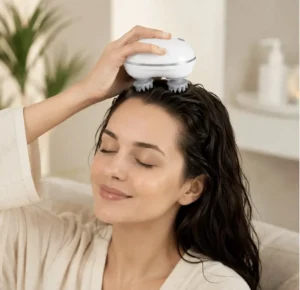
Coverage. A textured scalp massager, particularly a handheld silicone or bristled tool, can sometimes reach areas more evenly across a full pass than fingers manage, especially for people with thicker hair.
Consistency. This is where tools often have a real edge. Some people find a dedicated device makes the routine feel more like a deliberate ritual, which can translate into sticking with it more reliably over weeks and months, precisely the kind of consistency that matters most for scalp massage for hair growth.
Manual versus powered tools. Simple manual massagers are inexpensive and straightforward. Powered or vibrating versions add mechanical movement without requiring as much manual effort, which some people find easier to sustain daily, particularly if hand fatigue is a factor.
Neither option is definitively “better” for outcomes, since the underlying mechanism, mechanical stimulation of the scalp, is similar either way. The bigger factor is which one you’ll actually use regularly, since sticking with either tool is what ultimately answers how often should you massage your scalp for hair growth in your own routine.
Can You Massage Your Scalp With Hair Products?
Yes, and many people naturally combine scalp massage with a product they’re already applying, though it’s worth being reasonable about what to expect from any specific product.
Oils, like lightweight carrier oils, are commonly used to reduce friction during massage and can make the process feel more comfortable, particularly for longer hair.
Serums, including those marketed for scalp health, can be massaged in as part of the same routine, though it’s worth avoiding the assumption that any single serum dramatically changes the outcome of the massage itself, or that it changes how often should you massage your scalp for hair growth in any meaningful way.
Leave-in products can also be worked in during a massage session, mainly as a matter of convenience rather than because massage is required for the product to work.
It’s worth being cautious here: no specific oil, serum, or leave-in product should be assumed to universally boost hair growth just because it’s applied during a scalp massage. Product marketing claims vary widely, and this guide isn’t in a position to validate specific formulas. If you’re using a product alongside massage, treat the massage as a pleasant, low-risk addition to your routine rather than something that guarantees the product performs better. Whatever products you use, how often should you massage your scalp for hair growth stays the same general guideline either way.
Can Scalp Massage Help Thinning Hair?
It’s reasonable to have modest, realistic expectations here rather than assuming scalp massage will meaningfully reverse thinning on its own.
Hair thinning has a wide range of possible causes, including genetics, hormonal shifts, certain medical conditions, nutritional deficiencies, and more. Scalp massage doesn’t directly address any of these underlying causes, and there’s no strong evidence that it functions as an effective standalone treatment for thinning hair.
What it may offer is a low-risk, complementary habit alongside other care, most notably through mechanical stimulation of the scalp that some early, limited research has linked to modest improvements in hair thickness, though not necessarily thinning reversal specifically.
If you’re noticing significant, sudden, or patchy thinning, or hair loss that feels different from typical gradual changes, that’s a reasonable point to check in with a dermatologist or healthcare provider rather than relying on how often should you massage your scalp for hair growth to address it on its own. A professional can help identify the actual cause and whether other treatments make sense for your situation.
Signs You’re Massaging Your Scalp Too Aggressively
Paying attention to how your scalp responds is more useful than following a rigid formula. A few signs suggest it’s time to ease up:
- Pain during the massage itself, rather than a pressure that feels firm but tolerable.
- Tenderness that lingers after the session ends, particularly into the next day.
- Visible irritation, including redness that doesn’t fade quickly or a flushed, overworked appearance to the skin.
- Scratching sensations or actual scratches, which usually indicate nails are involved rather than fingertip pads.
- Excessive pressure that leaves marks or a sore feeling when you touch the area afterward.
None of these signs are cause for panic, but they are a clear cue to lighten your touch, shorten your session, or take a short break before resuming a gentler routine. Adjusting for these signs is really part of getting how often should you massage your scalp for hair growth right for your own skin.
Can Scalp Massage Be Combined With Red Light Therapy?
Yes, and it’s an increasingly common pairing in modern scalp-care tools. Red light therapy, which uses specific light wavelengths and has its own separate body of research related to hair density, is sometimes built directly into handheld devices that also provide massage.
The appeal is practical: rather than running two separate routines, a combined device lets you address mechanical stimulation and light-based treatment in a single session. Whether the combination performs meaningfully better than either approach alone hasn’t been extensively studied as a specific pairing, so it’s reasonable to think of it as a convenient way to streamline your routine rather than a guaranteed multiplier of results.
If you’re curious how this combination works in an actual product, our review of the ROVAY Red Light Therapy Scalp Brush takes a closer look at how one device handles massage and light therapy together, including its settings, day-to-day usage, and how often should you massage your scalp for hair growth when using a combined tool like that.
Frequently Asked Questions
How often should you massage your scalp for hair growth? Most guidance points to daily or near-daily sessions of a few minutes each, prioritizing gentle, consistent pressure over occasional, intense sessions.
How often to massage scalp if you’re just starting out? Starting with four to five sessions a week is a reasonable way to build the habit before committing to a strict daily routine.
Can you massage your scalp every day? Yes, for most people, as long as the pressure stays gentle to moderate rather than aggressive, and the scalp isn’t showing signs of irritation.
How long should you massage your scalp per session? Around four to five minutes is a commonly recommended range, enough to cover the whole scalp without overdoing it.
How often should you use a scalp massager? Similar to manual massage, daily or near-daily use, for a few minutes at a time, is a reasonable frequency for most scalp massage devices.
Is a daily scalp massage routine actually necessary? Not strictly necessary, but consistency does appear to matter more than any single session, so a regular routine, whether daily or close to it, is more useful than sporadic, infrequent use when thinking about how often should you massage your scalp for hair growth overall.
Conclusion
So, how often should you massage your scalp for hair growth? For most people, daily or near-daily sessions of around four to five minutes, using gentle to moderate pressure, represent a reasonable, sustainable approach based on the limited research and general guidance available. What matters more than hitting an exact frequency is building a consistent scalp massage routine you can actually stick with, without irritating your scalp along the way.
Keep your expectations realistic: scalp massage is a low-risk, potentially helpful addition to a broader hair-care routine, not a guaranteed fix for hair loss or thinning. If you’re dealing with noticeable or persistent hair changes, pairing a gentle massage habit with advice from a healthcare professional is a more balanced approach than expecting massage alone to carry the results.