How Long Should You Use a Massage Gun? A Guide to Using It Safely
Introduction
A few minutes with a massage gun on a tight shoulder or a sore calf can feel like exactly what your muscles needed. So it’s a natural next thought: if two minutes feels good, wouldn’t ten minutes feel even better?
Not necessarily. How long should you use a massage gun comes down to a fairly narrow, well-supported range for most people and most muscle groups, generally somewhere around one to two minutes per area, rather than an extended session on any single spot. Longer isn’t automatically more effective, and in some cases it can actually work against you.
This guide walks through practical timing for different muscles, how duration shifts before and after exercise, the signs you’re using a massage gun well versus overdoing it, and when it makes sense to put it down and check in with a professional instead.
How Long Should You Use a Massage Gun?
As a general starting point, most guidance around massage gun use suggests keeping sessions on any one muscle group to roughly one to two minutes, with a total session length of somewhere between five and fifteen minutes depending on how many areas you’re targeting.
That range isn’t an arbitrary rule, though, and it’s really the foundation for how long to use a massage gun in any specific situation — it reflects how percussive therapy actually works. A massage gun delivers rapid, repeated pulses to soft tissue, and that stimulation is meant to increase blood flow and temporarily ease muscle tension. Once that effect has kicked in, continuing to apply pressure past that point doesn’t necessarily deepen the benefit, and past a certain point can start to irritate the tissue instead.
Several factors shape what’s actually appropriate for you:
- The specific muscle. Larger, denser muscles generally tolerate longer use than smaller or more sensitive ones.
- Intensity and speed setting. A higher intensity setting typically calls for a shorter duration than a gentler one.
- Your personal comfort and sensitivity. Some people’s tissue responds quickly, while others may need slightly longer to feel the same release.
- The manufacturer’s instructions. Since massage guns vary in power, attachment heads, and intensity settings across different models, it’s worth checking your specific device’s guidance rather than assuming every massage gun behaves identically.
That last point matters more than people often realize. Two massage guns from different brands can have very different maximum speeds and amplitude, which means a “safe” duration on one device might feel far too intense on another. If you’re comparing models or trying to figure out what settings suit your needs, it’s worth looking at reviews of specific massage guns to understand how their intensity range, attachment options, and recommended massage gun duration compare.
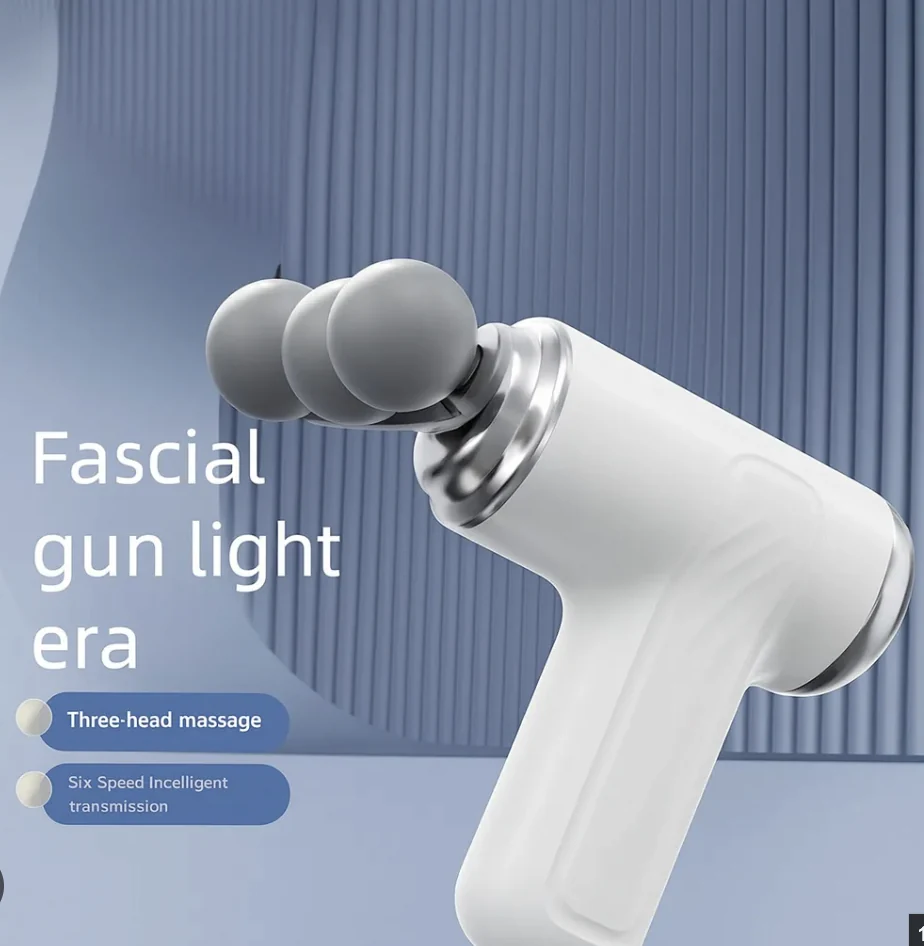
How Long Should You Use a Massage Gun on Each Muscle?
There isn’t a single number that applies evenly to every part of the body, since muscle size, density, and sensitivity all vary quite a bit.
Large muscle groups, like the quadriceps, hamstrings, glutes, and upper back, generally tolerate the higher end of the typical range, often up to about two minutes per area. These muscles have more tissue to distribute the pulses across, which tends to make longer use feel comfortable rather than irritating.
Smaller muscle groups, such as the calves, forearms, or the muscles around the shoulders, usually do better with a shorter duration, often closer to 30 seconds to a minute. There’s simply less tissue there, so the same intensity that feels moderate on a thigh can feel much more intense on a smaller area.
Particularly sensitive or tight areas deserve extra caution regardless of size. A knot or an especially tender spot can feel tempting to focus on directly and for longer, but that’s often exactly where shorter, gentler passes make more sense, moving the device around the area rather than holding it in one place.
The most reliable approach is to treat these ranges as a starting point and adjust based on how the muscle actually responds, rather than committing to an identical routine for every part of the body. In other words, how long should you use a massage gun really depends on which muscle you’re addressing at that moment.
How Long Should You Use a Massage Gun Before Exercise?
Using a massage gun as part of a warm-up has become fairly common, and it can be a reasonable way to increase blood flow and loosen tissue before activity. For this purpose, shorter is generally better.
A brief pass of around 30 seconds to one minute per major muscle group you’re about to use is typically enough to help the tissue feel more ready for movement, without overdoing it. Before a workout, how long should you use a massage gun really comes down to preparation rather than deep relaxation. The goal before exercise is to prepare the muscle, not to fully relax it, since deeply relaxing a muscle right before activity that requires strength or explosiveness isn’t necessarily what you want.
Excessive use immediately before exercise, particularly at high intensity, may leave a muscle feeling temporarily fatigued or less responsive rather than primed. If you notice that your muscles feel unusually loose, weak, or sluggish right after using a massage gun, that’s worth paying attention to before jumping into demanding movement.
How Long Should You Use a Massage Gun After Exercise?
Post-workout use is one of the more popular reasons people reach for a massage gun, often as part of a broader recovery routine alongside stretching or foam rolling.
After exercise, sticking to roughly one to two minutes per muscle group, similar to the general guideline, tends to work well. The idea is to support circulation and ease post-workout tightness, not to work the muscle intensely again right after it’s already been taxed.
It’s worth noting that duration should generally stay moderate here too, since how long should you use a massage gun after a hard session isn’t necessarily longer just because the muscles feel more worked. Muscles that have just been worked hard are often more sensitive than usual, so what felt like a comfortable intensity before a workout might feel more intense afterward. Starting at a lower setting and adjusting from there is a reasonable way to gauge what your body needs on a given day.
Can You Use a Massage Gun for Too Long?
Yes, it’s possible to overdo it, even though a massage gun can feel relatively gentle compared to deep manual massage.
Prolonged use, particularly on one specific spot, can lead to increased soreness, bruising, or irritation of the tissue rather than the relief you were going for. This is especially true at higher intensity settings, where the repeated impact adds up more quickly than it might seem in the moment.
Some of the more common issues associated with excessive use include:
- Lingering soreness that feels different from normal post-massage relaxation
- Bruising or visible redness in the treated area
- Numbness or tingling, particularly if used near a nerve-dense area
- A feeling of increased tension rather than relief afterward
None of this means a massage gun is inherently risky when used reasonably. It simply means that, like most tools involving repeated mechanical pressure, more isn’t automatically better, and there’s a point of diminishing, and eventually counterproductive, returns — which is really the heart of how long should you use a massage gun before it stops helping and starts working against you.
How Do You Know You Are Using a Massage Gun Correctly?
Paying attention to how your body responds during and after use is generally more useful than sticking rigidly to a timer.
Sensations that are generally expected include a firm, pulsing pressure, mild discomfort on particularly tight spots that eases as you continue, and a sense of muscle relaxation or reduced tightness once you’re done.
Signs that suggest you should stop or adjust include sharp or shooting pain, a sensation that gets worse rather than better the longer you continue, numbness or tingling, or noticeable bruising either during or after the session. General discomfort that feels like “productive” pressure is different from pain that feels wrong, and learning to tell the two apart is part of using a massage gun well.
If you’re new to using one, starting at a lower intensity setting and a shorter duration, then gradually adjusting based on how your body responds, is a more reliable approach than starting at maximum settings and working backward from discomfort. This kind of trial-and-adjustment process is really how most people settle on how long should you use a massage gun for their own body.
How Long Should You Use a Massage Gun for Sore Muscles?
For general muscle soreness, such as the kind that shows up a day or two after a tough workout, many people find that one to two minutes per affected muscle, done gently rather than aggressively, feels helpful.
Figuring out how long to use massage gun for sore muscles is less about a strict rule and more about gentle, moderate sessions. It’s worth being clear that a massage gun isn’t a treatment for soreness in the sense of eliminating it or speeding up the underlying recovery process in a guaranteed way. What it may do is offer temporary relief from tightness and support blood flow to the area, which some people find makes the soreness feel more manageable in the moment.
If soreness is severe, doesn’t improve with rest over the following days, or feels more like sharp or localized pain rather than the general achiness typical of exercise-related soreness, that’s a signal worth taking seriously. In that scenario, the answer to how long should you use a massage gun is simply not at all until you’ve had it checked out, rather than something to try to work through with longer or more intense sessions.
Common Mistakes to Avoid
A few habits tend to turn a genuinely useful tool into a source of unnecessary discomfort, and most of them come back to ignoring how long should you use a massage gun in the first place.
- Staying on one spot too long. Holding the device in a single location, rather than moving it in slow passes across the muscle, concentrates pressure in a way that can lead to irritation.
- Using excessive pressure. Pressing the device firmly into the muscle on top of its own percussive force adds intensity beyond what’s usually necessary or comfortable.
- Starting at maximum intensity. Jumping straight to the highest speed setting, especially for a new user, makes it harder to gauge how your body is actually responding.
- Using it on inappropriate areas. Bony areas, joints, the front of the neck, and areas with limited muscle tissue generally aren’t good candidates for percussive massage.
- Ignoring pain. Continuing through sharp, worsening, or unusual pain in hopes it will “work itself out” is a common way minor discomfort turns into something more significant.
When Should You Avoid Using a Massage Gun?
There are situations where it’s reasonable to skip the massage gun altogether, or check with a healthcare provider before using one.
- If you have a suspected fracture, sprain, or acute injury, since applying percussive pressure to an already-injured area can make things worse.
- If you have a condition affecting blood clotting, are taking blood-thinning medication, or have a history of deep vein thrombosis, since increased blood flow to an area isn’t always desirable in these cases.
- If you’re pregnant, particularly around the abdomen and lower back, without first checking with a healthcare provider.
- If you have a skin condition, open wound, or recent surgical site in the area you’re considering treating.
- If pain persists or worsens despite rest and reasonable self-care, since that may point to something a massage gun isn’t equipped to address.
This isn’t a diagnosis of any particular condition, just a reminder that a massage gun is a wellness tool, not a substitute for medical evaluation when something feels genuinely wrong rather than routinely tight or sore. In these situations, the question shifts from how long should you use a massage gun to whether you should be using one at all right now.
FAQs
How long should I use a massage gun? In general, how long should you use a massage gun comes down to about one to two minutes per muscle group, with a total session of around five to fifteen minutes depending on how many areas you’re addressing.
How long should I use a massage gun on each muscle? It varies by muscle size and sensitivity: larger muscles like the quads or glutes can typically handle up to about two minutes, while smaller or more sensitive areas usually do better with 30 seconds to a minute.
Can I use a massage gun for 30 minutes? This isn’t generally recommended. Extended use, especially at higher intensity, increases the risk of soreness, bruising, or irritation rather than added benefit.
Is it okay to use a massage gun every day? For many people, using a massage gun in moderation daily is fine, as long as sessions stay within a reasonable duration and intensity and the area isn’t showing signs of irritation. If you notice ongoing soreness or discomfort, it’s worth scaling back or taking a break.
How long should I use a massage gun after working out? Around one to two minutes per muscle group is typically enough for post-workout use, focusing on supporting circulation and easing tightness rather than working the muscle intensely again.
Conclusion
So, how long should you use a massage gun? For most muscles and most people, somewhere around one to two minutes per area is a reasonable, evidence-informed range, with total sessions generally staying under fifteen minutes. Larger muscles can typically handle a bit more, smaller and more sensitive areas usually need less, and your own comfort, along with your specific device’s manufacturer instructions, should always guide the final call.
More time isn’t automatically better here, and that’s really the one thing to remember whenever you find yourself wondering how long should you use a massage gun again. Paying attention to how your muscles actually respond, starting gently, and stopping if something feels like pain rather than productive pressure will serve you better than chasing a longer session. And if soreness or discomfort persists beyond what rest and sensible self-care can address, that’s a good moment to loop in a healthcare professional rather than reaching for the massage gun again.