Anti-glare glasses in our everyday life 2026
Anyone who has squinted at a laptop screen under fluorescent office lights, been momentarily blinded by oncoming headlights on a night drive, or struggled to read a phone in direct sunlight knows how disruptive glare can be. It is more than just an annoyance; persistent glare exposure can lead to eye strain, headaches, and fatigue, especially for people who spend hours in front of digital screens or driving after dark.
As daily life becomes increasingly saturated with bright displays, harsh overhead lighting, and reflective surfaces, more people are looking for practical ways to protect their eyes and reduce visual discomfort.
This is where anti-glare glasses come in. Marketed as a simple fix for a common problem, these glasses promise clearer, more comfortable vision in environments filled with artificial light and reflections. But the term “anti-glare” is often used loosely, and it does not always mean the same thing to every manufacturer or retailer.
In most cases, “anti-glare” refers to an anti-reflective (AR) coating applied to eyeglass lenses, which reduces the amount of light reflecting off the lens surface.
Understanding this distinction is the first step to knowing whether these glasses can actually deliver on their promise.
What Are Anti-Glare Glasses?
Anti-glare glasses, more accurately called anti-reflective (AR) glasses, are eyeglasses treated with a thin lens coating designed to reduce the amount of light that reflects off the front and back surfaces of the lens. Rather than blocking light from reaching the eye, this coating allows more usable light to pass through the lens itself, cutting down on the distracting reflections and halos that appear around screens, headlights, and overhead lighting.
Anti-Glare vs. Blue-Light-Blocking vs. Polarized vs. Tinted Lenses
It’s easy to confuse anti-glare glasses with other specialty lens types, but each serves a different purpose.
Blue-light-blocking lenses are designed to filter or absorb a portion of the blue wavelengths emitted by digital screens, and while they are sometimes marketed alongside anti-glare products, they address a different concern — light wavelength rather than surface reflection.
Polarized lenses, most commonly found in sunglasses, use a special filter to block intense horizontal glare from surfaces like water, roads, or snow, making them effective outdoors but unsuitable for indoor screen use since they can distort digital displays.
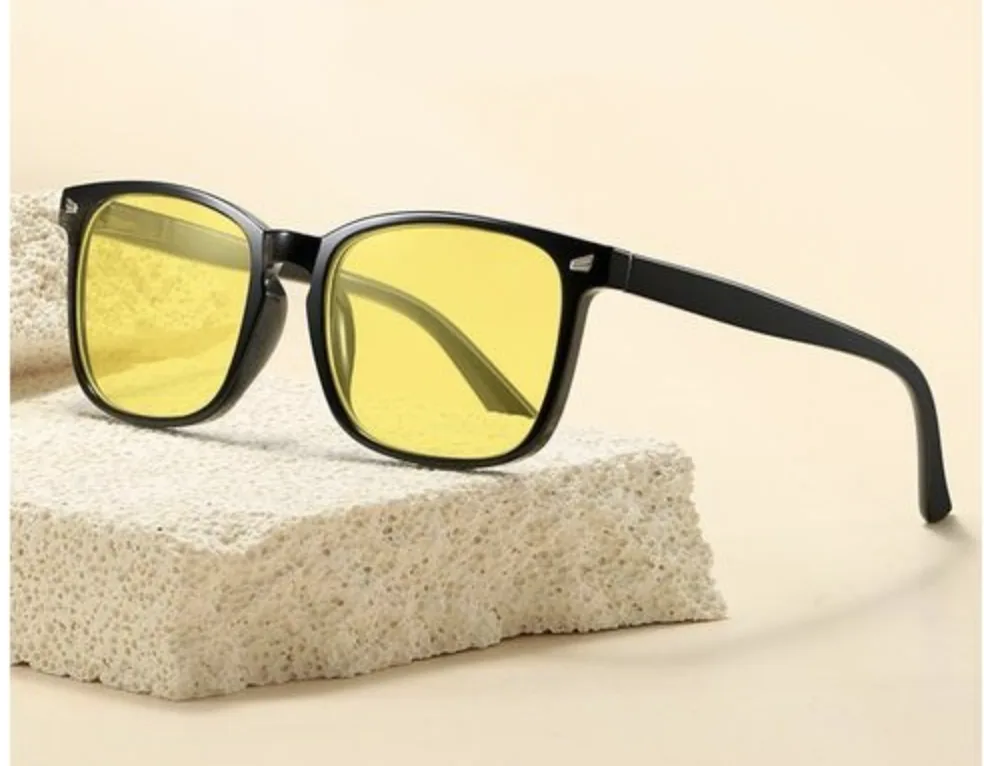
Tinted lenses simply reduce the overall amount of light reaching the eye by darkening the lens, which can help with brightness but does nothing to address reflections.
How Anti-Reflective Coating Works
Anti-reflective coating works differently from all of these. It is applied in ultra-thin layers to the lens surface and functions through a principle called destructive interference, where the coating causes reflected light waves to cancel each other out rather than bounce back into the wearer’s eyes. This is why AR-coated lenses allow more light to pass through toward the eye instead of reflecting away, which improves clarity and reduces the strain associated with glare.
What the Coating Looks Like
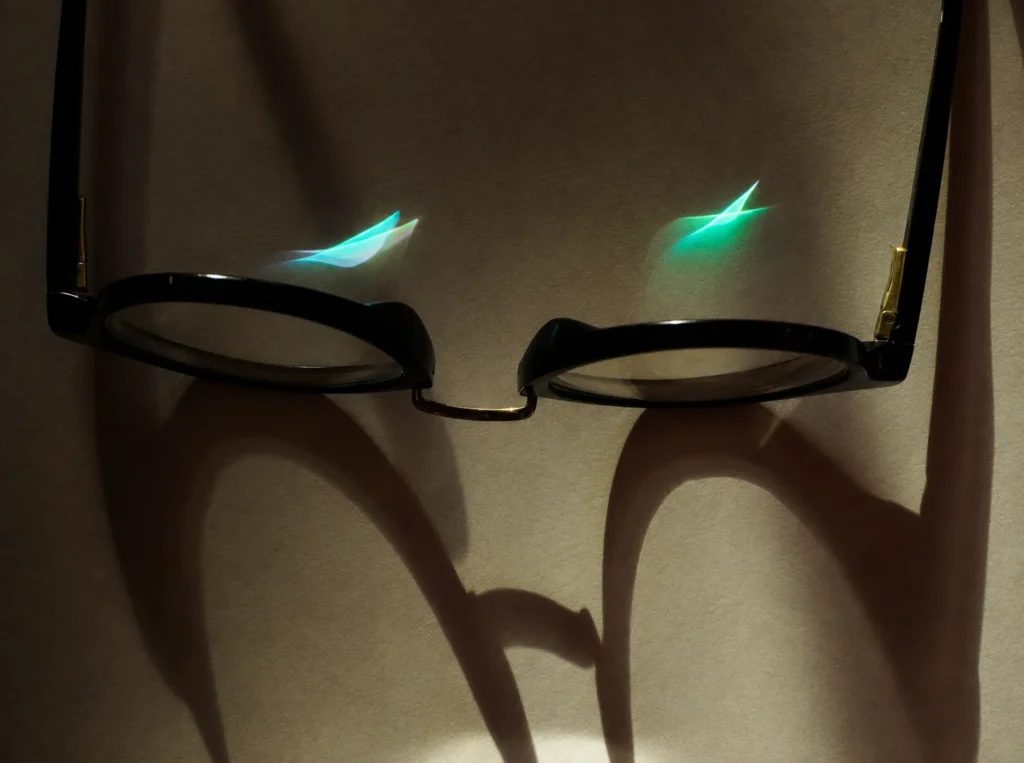
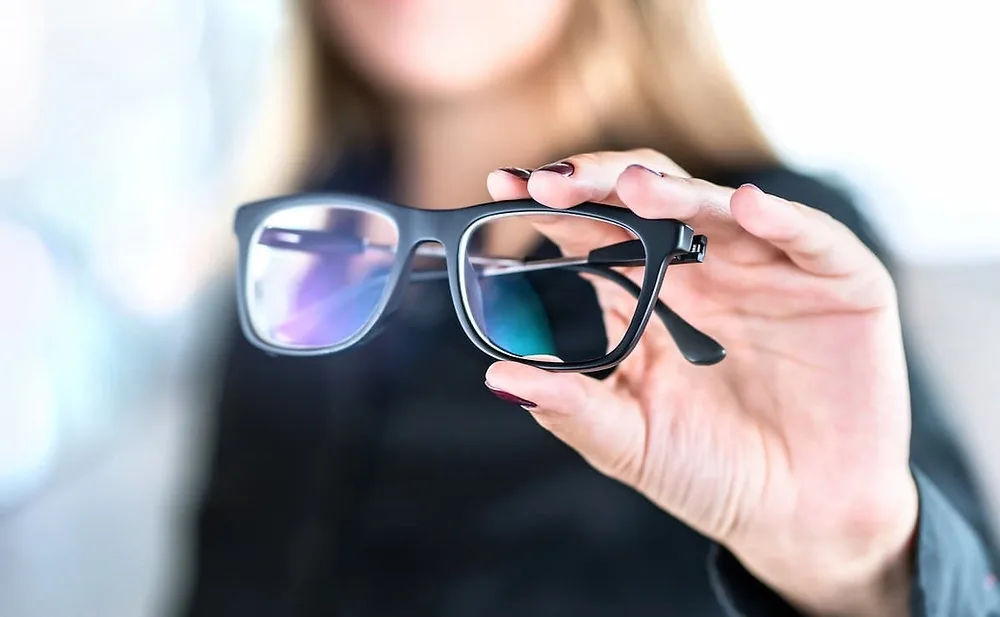
Visually, a well-applied anti-reflective coating makes lenses appear almost invisible in photographs and video calls, since there is little to no glare bouncing off the surface. Depending on the coating type and angle of light, it may also produce a faint colored sheen — often green, blue, or purple — across the lens surface. This subtle tint is a normal byproduct of the coating’s layered structure and does not affect vision, though the degree of visibility varies by brand and coating quality.
How Do Anti-Glare Glasses Work?
How Light Reflects Off Ordinary Lenses
Every time light hits an untreated eyeglass lens, a portion of it bounces off the surface instead of passing through to the eye. This happens because light travels through air and then abruptly meets a denser material — the lens — and the sudden change causes some of the light to reflect. On a standard lens, this reflection can account for roughly 8 to 10 percent of the light reaching it, which is what creates visible glare, especially in front of screens or bright lights.
How Anti-Reflective Coatings Reduce Reflection
Anti-reflective coatings counteract this by applying several ultra-thin layers of material to the lens, each engineered to a precise thickness. As light passes through these layers, some of it reflects at each boundary, and because of the layers’ calculated thickness, these reflected light waves end up out of sync with one another. When they overlap, they effectively cancel each other out — a phenomenon known as destructive interference — dramatically reducing the amount of light bounced back.
Why This Makes Lenses Appear Clearer
With less light reflecting off the surface, more light passes directly through the lens to the eye. This reduces the ghosting, halos, and washed-out look that reflections cause, resulting in lenses that appear more transparent and images that look sharper and higher-contrast.
The Effect in Different Environments
Computer screens: AR coating cuts down on the mirror-like reflections of screen light bouncing off the lens, making text easier to read during long work sessions.
Bright indoor lighting: Overhead fluorescent or LED lighting often reflects harshly off standard lenses; AR coating minimizes this bounce-back, reducing squinting.
Night driving: Reflections from oncoming headlights and streetlights are significantly softened, which can reduce the halo effect that makes night driving uncomfortable for many people.
Outdoor environments: While not a substitute for sunglasses, AR coating reduces reflections from sunlight hitting the lens surface, offering modest daytime comfort as well.
A Simple Example
Think of a calm lake at night. If the water is still, you see a bright, distracting reflection of the moon on its surface. Anti-reflective coating works like gently rippling that water — it disrupts the reflection so more light passes through instead of bouncing back into your eyes.
Benefits of Anti-Glare Glasses
1. Reduced Reflections
The most immediate benefit of anti-glare glasses is the reduction in reflections bouncing off the lens surface. Ordinary lenses reflect a noticeable percentage of the light that hits them, which can create bright spots, glare, and distracting flashes of light — particularly under artificial lighting or when facing a light source directly. Anti-reflective coating minimizes this bounce-back, resulting in a calmer, less visually cluttered field of view. For people who spend long stretches under office lighting or near windows, this reduction alone can make a noticeable difference in day-to-day comfort.
2. Better Visual Clarity
Because anti-reflective coating allows more light to pass through the lens rather than reflecting away from it, wearers often notice that their vision feels sharper and more defined. Instead of light being lost to surface reflections, it reaches the eye as intended, which can improve contrast and make fine details — like small text or distant objects — easier to distinguish. This is especially useful for anyone doing detail-oriented work, such as reading, writing, or working on intricate visual tasks.
3. Improved Appearance
Anti-glare lenses also offer a cosmetic advantage that is easy to overlook. Without the coating, standard lenses can reflect light in a way that obscures the wearer’s eyes, creating a glossy or opaque appearance that makes it harder for others to make eye contact. Anti-reflective coating reduces this effect, allowing the eyes to remain visible and giving glasses a cleaner, more natural look. This is particularly noticeable in photographs and video calls, where reflections from camera flashes, ring lights, or computer screens can otherwise create distracting glare across the lens, sometimes obscuring the eyes entirely on camera.
4. More Comfortable Screen Use
For anyone who spends significant time in front of digital screens, glare is often less about the screen itself and more about competing light sources — an overhead light, a nearby window, or a lamp positioned behind the user. These reflections can layer on top of the screen’s own brightness, creating visual noise that contributes to eye fatigue. Anti-reflective lenses reduce this layered glare, allowing the eyes to focus more easily on the screen content itself rather than fighting through reflected light. Over a full workday, this can translate into less squinting and a more relaxed viewing experience.
5. Potential Nighttime Benefits
Many people report that anti-glare glasses make night driving somewhat more comfortable, since the coating reduces the intensity of reflections from oncoming headlights, streetlights, and illuminated signage bouncing off the lens surface. This can soften the harsh flare and halo effect that some drivers experience after dark. That said, it’s important to set realistic expectations: anti-glare coating reduces reflections on the lens itself, but it does not eliminate glare from bright light sources reaching the eye directly, nor does it correct for other causes of nighttime glare sensitivity, such as certain eye conditions or aging vision. Anti-glare glasses should be viewed as one tool for modest improvement rather than a complete solution for night driving discomfort.
Anti-Glare Glasses and Computer Use
Why Screens Produce Uncomfortable Reflections
Computer, tablet, and phone screens are essentially flat, often glossy surfaces, which makes them prone to reflecting nearby light sources back toward the viewer. When this reflected light overlaps with the content displayed on the screen, it creates a layered glare effect that can make text harder to read and images less crisp, forcing the eyes to work harder to separate the actual content from the reflected light.
How Room Lighting and Screen Position Contribute
The severity of screen glare often has less to do with the screen itself and more to do with its surroundings. Overhead fluorescent lighting, a window positioned behind or beside a monitor, or a desk lamp reflecting directly off the display can all intensify glare. Screen position matters too: a monitor angled toward a light source or window is far more likely to produce distracting reflections than one positioned perpendicular to ambient light.
How Anti-Reflective Coatings May Help
Anti-reflective coatings on eyeglass lenses can reduce the amount of ambient light that reflects off the lens surface itself, which may lessen the layered glare effect when looking at a screen in a bright or poorly arranged room. By minimizing lens-surface reflections, the coating allows more of the screen’s actual content to reach the eye clearly.
Reducing Reflections vs. Preventing Eye Strain
It’s worth drawing a clear distinction here: anti-reflective coating addresses reflections on the lens, not the broader causes of digital eye strain, which can include screen brightness, viewing distance, blink rate, and existing vision correction needs. Anti-glare glasses may make screen viewing more comfortable, but they are not a guaranteed fix for eye strain on their own.
Other Habits That Can Help
For more comprehensive comfort, anti-glare glasses work best alongside supportive habits:
Adjust screen brightness to match the surrounding room rather than leaving it at a fixed level.
Reduce surrounding glare by repositioning lamps or closing blinds during bright parts of the day.
Position the screen appropriately, ideally perpendicular to windows and light sources rather than facing or backing onto them.
Take regular breaks, such as following the 20-20-20 rule, to give the eyes periodic rest from sustained screen focus.
Keep lenses clean, since smudges and dust can scatter light and add to visual discomfort regardless of any coating applied.
Are AntiGlare Glasses Good for Night Driving?
Why Nighttime Glare Feels More Noticeable
At night, the pupils dilate to let in more light, which makes the eyes more sensitive to sudden bright points of light against a dark background. This contrast between darkness and intense light sources is what makes nighttime glare feel so much sharper and more disruptive than the glare experienced during the day.
Common Sources of Nighttime Visual Discomfort
Several everyday elements contribute to this discomfort. Oncoming headlights, especially from vehicles with high beams or newer LED headlights, can produce intense flare and halo effects. Streetlights add another layer of scattered brightness along dark roads. Wet or rain-slicked roads compound the problem further, since water on the pavement reflects and scatters light from headlights and streetlights in unpredictable directions, intensifying the overall sense of visual clutter.
How Anti-Reflective Coatings Can Help
Anti-reflective coatings reduce the amount of light that reflects off the surface of the eyeglass lens itself. In practical terms, this can lessen the secondary glare and halo effect caused by light bouncing around inside or across the lens before reaching the eye, which some drivers find makes bright lights at night feel slightly less overwhelming.
Understanding the Limitations
It’s important to be clear about what this coating can and cannot do. Anti-reflective coating addresses reflections on the lens surface — it does not block or diminish the direct glare coming from a headlight or streetlight shining straight into the eye. That kind of direct light exposure is a separate issue from lens-surface reflection, and no coating can fully neutralize it.
Prescription Accuracy and Lens Quality Matter
The overall quality of night vision also depends heavily on factors beyond the coating itself. An outdated or slightly inaccurate prescription can make lights appear to blur, spread, or halo regardless of any lens treatment. Similarly, lens quality, coating application, and even minor lens scratches can all influence how much glare a person perceives while driving after dark.
A Realistic Expectation
Given these variables, anti-glare glasses are best understood as a potential source of modest, incremental comfort for night driving rather than a fix for glare-related discomfort. Drivers dealing with significant nighttime visual difficulty should consider anti-glare coating as one piece of a broader conversation with an eye care professional, rather than a standalone solution.
Anti-Glare vs. Blue-Light-Blocking vs. Polarized Glasses
With so many lens options marketed for visual comfort, it helps to see how they compare side by side.
| Type | Main Purpose | Best Suited For |
|---|---|---|
| Anti-reflective | Reduces reflections from lenses | Screens, indoor lighting, nighttime use |
| Blue-light filtering | Filters some wavelengths of blue light | People specifically seeking blue-light filtering |
| Polarized | Reduces certain reflected light, especially outdoors | Driving, water, snow, outdoor activities |
| Tinted | Reduces overall light entering the eyes | Bright outdoor environments |
Anti-reflective lenses are built to minimize the light that bounces off the lens surface itself. Because they work on reflection rather than overall brightness, they’re particularly well suited to indoor and screen-heavy environments, where the goal is clarity rather than dimming incoming light.
Blue-light-blocking lenses take a different approach entirely, targeting specific wavelengths of light emitted by digital devices rather than surface reflections. They’re a good match for anyone who has specifically sought out blue-light filtering, though the actual visual comfort benefits of this filtering are still debated among researchers.
Polarized lenses are designed to cut down on intense, directional glare — the kind that bounces off flat surfaces like roads, water, or snow. This makes them a strong choice for driving and outdoor activities, but their filtering effect can distort or darken digital screens, making them a poor fit for computer use.
Tinted lenses take the simplest approach of all, reducing the total amount of light reaching the eyes by darkening the lens uniformly. This works well for managing overall brightness outdoors but does nothing to address reflections or specific wavelengths.
Ultimately, these categories aren’t mutually exclusive — some lenses combine anti-reflective coating with tint or polarization — but understanding each one’s primary function makes it easier to choose lenses that match the actual problem being solved, whether that’s screen glare, driving comfort, or general outdoor brightness.
Possible Drawbacks and Limitations
While anti-glare glasses offer real benefits, they come with a few practical limitations worth understanding before purchasing.
Coatings Can Scratch or Become Damaged
Anti-reflective coatings sit on the outer surface of the lens, which makes them more susceptible to fine scratches than the lens material underneath. Improper cleaning, such as wiping lenses with a dry cloth or rough fabric, can gradually damage the coating and create visible scuffing.
Coatings May Wear Down Over Time
Like any surface treatment, AR coating isn’t permanent. With regular handling, cleaning, and exposure to everyday conditions, the coating can gradually thin or degrade, sometimes leading to a hazy appearance or reduced effectiveness after a few years of use.
Lenses Still Collect Fingerprints, Dust, and Smudges
Anti-reflective coating reduces reflections, but it does not make lenses resistant to everyday grime. In fact, because the coating makes lenses more transparent, smudges, fingerprints, and dust can sometimes be more visible than on untreated lenses, requiring more frequent cleaning.
They Don’t Remove All Sources of Glare
As covered earlier, anti-glare coatings reduce reflections occurring on the lens surface itself. They do not eliminate glare originating from a direct light source, such as a headlight shining straight into the eyes, since that type of glare isn’t caused by lens reflection at all.
Coating Quality Varies
Not all anti-reflective coatings are created equal. Less expensive or lower-quality coatings may be thinner, less evenly applied, or more prone to peeling and scratching, meaning performance and durability can vary significantly between brands and price points.
Not a Fix for Every Visual Problem
Finally, anti-glare glasses address a specific issue — lens-surface reflection — and aren’t a substitute for proper vision correction, treatment of underlying eye conditions, or professional guidance regarding light sensitivity.

How to Choose Anti-Glare Glasses
Choosing the right anti-glare glasses involves more than picking a frame — several practical factors affect how well the glasses will perform.
Prescription Requirements
Anti-reflective coating can be applied to both prescription and non-prescription lenses, so the first step is determining whether corrective lenses are needed and getting an updated prescription if it’s been a while since the last eye exam.
Lens Material
Lens material affects clarity, weight, and durability. Options like polycarbonate or high-index plastic are common choices, each offering different trade-offs between thinness, impact resistance, and cost.
Quality of the Anti-Reflective Coating
Not all coatings perform equally. Higher-quality coatings tend to be more evenly applied, more effective at reducing reflections, and longer-lasting than budget alternatives.
Scratch Resistance
Since AR coatings are prone to fine scratching, choosing lenses with an added scratch-resistant top layer can help the coating hold up better to daily handling and cleaning.
UV Protection for Outdoor Use
Anti-reflective coating does not inherently block UV rays, so anyone planning to wear the glasses outdoors regularly should confirm UV protection is included separately.
Blue-Light Filtering: Wanted or Not?
Some retailers bundle blue-light filtering with anti-glare coating by default. Buyers should decide intentionally whether this feature is actually desired, since it serves a different purpose and can slightly alter lens tint.
Frame Comfort and Fit
A well-fitting frame affects both comfort and how effectively the lenses sit relative to the eyes, which can influence visual clarity throughout the day.
Intended Use
Whether the glasses are primarily for computer work, driving, or general everyday wear can influence lens choice, coating type, and whether additional features are worth including.
Cost Versus Coating Quality
Finally, it’s worth weighing price against coating quality, since cheaper coatings may compromise on durability or performance over time.
How to Care for Anti-Glare Lenses
Because anti-reflective coatings are more delicate than the lens surface itself, proper care goes a long way toward preserving their appearance and performance.
Always clean lenses with a soft microfiber cloth rather than tissues, paper towels, or clothing, which can contain fibers rough enough to create fine scratches over time. When lenses need more than a quick wipe, use a cleaning solution specifically designed for eyeglasses, or plain water, following any care instructions provided by the manufacturer or optician.
Avoid abrasive materials altogether, including rough fabrics and dry wiping, since these can gradually wear down the coating. Harsh household chemicals — such as glass cleaners, alcohol-based products, or vinegar — should also be avoided, as they can break down the coating and cause it to peel or discolor.
When not in use, store glasses in a protective case to shield them from dust, pressure, and accidental scratches. It’s also best to avoid placing lenses face-down on hard surfaces like tables or countertops, since even a brief moment of contact can leave fine scratches on the coated surface.
Frequently Asked Questions
Do anti-glare glasses really work? Yes, in the sense that anti-reflective coatings genuinely reduce reflections off the lens surface, which many people notice as clearer, more comfortable vision under bright or artificial lighting.
Are anti-glare glasses good for computer use? They can help reduce lens-surface reflections from screens and overhead lighting, though they work best alongside good screen habits rather than as a standalone fix for digital eye strain.
Can anti-glare glasses help with night driving? They may modestly reduce halo and flare effects caused by reflections on the lens, but they don’t eliminate direct glare from headlights or streetlights.
Are anti-glare glasses the same as blue-light glasses? No. Anti-glare coating reduces surface reflections, while blue-light lenses filter specific light wavelengths — they address different concerns.
Can I add an anti-reflective coating to my prescription glasses? Usually, yes. Most opticians can apply AR coating to new or existing prescription lenses, depending on the lens material.
How long does an anti-glare coating last? Typically a few years with proper care, though quality and handling affect durability.
Do anti-glare glasses reduce eye strain? They may help reduce one contributing factor — reflected glare — but aren’t a complete solution for eye strain.
Are anti-glare glasses worth it? For most people who deal with screen glare or bright lighting, yes, though expectations should stay realistic.
Conclusion
Anti-glare glasses, more precisely known as anti-reflective lenses, work by reducing the amount of light that reflects off the surface of the lens itself. This allows more light to pass through to the eye, resulting in clearer vision, reduced surface glare, and a cleaner appearance in photos, video calls, and everyday interactions. However, it’s important to remember what this coating cannot do: it doesn’t eliminate every source of visual discomfort, correct underlying vision problems, or block direct glare from bright light sources like headlights.
These glasses tend to be most useful for people who spend long hours in front of screens, work under bright artificial lighting, or want a subtle improvement in comfort while driving at night. They are less of a cure-all and more of a practical enhancement.
The most practical takeaway is to choose lenses based on real-world use — considering coating quality, intended environment, and daily habits — rather than expecting anti-glare coating alone to solve every glare-related problem.