What Happens If You Microwave Metal? Here’s Why It Can Be Dangerous
Introduction
A stray fork left on a plate, a stainless steel travel mug grabbed without thinking, a metal twist tie still wrapped around a bread bag — metal ends up near the microwave more often than most people realize, usually by accident rather than intention. The question of what happens if you microwave metal isn’t just theoretical curiosity; it’s something worth understanding before that fork ends up spinning around with your leftovers.
The general consensus is that microwaving metal is unsafe and can cause sparking, damage to your appliance, and, in some cases, a small fire. But “generally unsafe” isn’t the same as “always catastrophic,” and the real answer involves a bit of nuance about why metal behaves so differently from food, glass, or ceramic once it’s inside a microwave.
This article breaks down exactly what happens if you microwave metal, why sparking occurs, whether any metal is ever considered safe, and what to do if you find yourself watching sparks fly inside your microwave right now. By the end, is metal microwave safe should feel like a question you can answer confidently for almost any object in your kitchen.
Can You Microwave Metal?
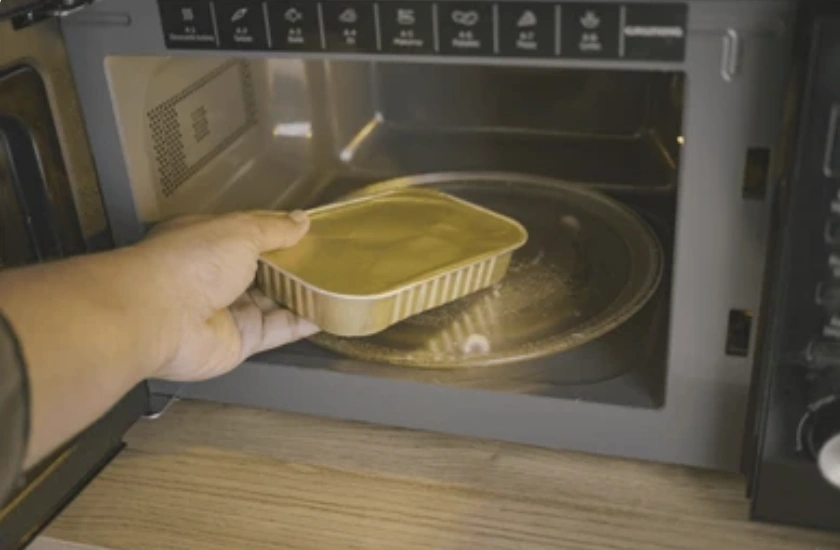
As a general rule, no — can you microwave metal is one of those kitchen questions where the safe default answer is a clear no, unless a specific product or accessory has been explicitly labeled or approved by its manufacturer for microwave use.
Microwaves are designed to heat food by directing electromagnetic energy at it, and that energy interacts with metal in a fundamentally different way than it does with water molecules in food. Rather than being absorbed, energy striking a metal surface gets reflected, and depending on the metal’s shape, thickness, and position, that reflected energy can concentrate intensely enough to spark. This reflective behavior is the starting point for understanding what happens if you microwave metal of almost any kind, whether it’s a fork, a can, or a piece of decorative trim on a plate.
This is why the standard advice across nearly every microwave manual is to keep metal out entirely: forks, spoons, twist ties, metal-rimmed dishes, and containers with any metallic trim. The exceptions are narrow and specific, tied to particular products designed and tested for microwave compatibility, not a general category of “safe metal” you can identify just by looking at it. Asking is metal microwave safe before every use, rather than assuming, is really the safer habit to build.
Why Does Metal Spark in a Microwave?
To really understand why does metal spark in the microwave, it helps to picture, in simple terms, what a microwave is actually doing inside that cooking chamber.
A microwave generates a rapidly oscillating electric field that fills the cavity. When this field reaches food, it causes water molecules to vibrate, and that vibration generates heat — the entire basis of how microwave cooking works. Metal responds to that same electric field completely differently, because metal is highly conductive: it contains electrons that move freely across its surface in response to an electric field, rather than staying in place.
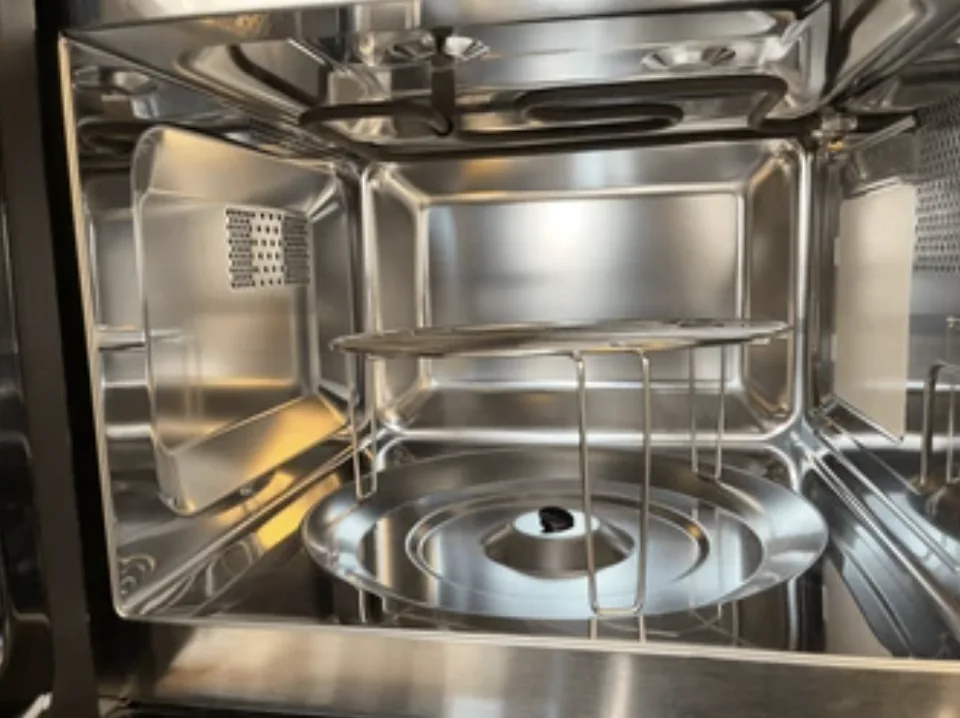
When the oscillating field reaches a smooth, solid, continuous piece of metal, like the interior walls of the microwave itself, those free electrons redistribute themselves in a relatively even, controlled way. That’s actually the reason microwave interiors are lined with metal in the first place — it reflects the energy back into the cooking chamber rather than absorbing or losing it.
The trouble starts with metal that isn’t smooth and continuous. Thin metal, sharp points, narrow edges, and folded or curved shapes force those free-moving electrons into a much smaller area than they’d naturally spread across. When the electrical charge concentrates intensely enough at one of these points, it can jump through the surrounding air toward another conductive surface. That visible jump is what we see as a spark, or arcing.
Understanding what happens if you microwave metal really comes down to these few variables, since they determine whether a given object sparks or not. A few factors make sparking more likely:
- Sharp edges and points concentrate electrical charge far more than smooth, rounded surfaces.
- Thin metal, like foil or wire, offers less material to spread that charge across evenly.
- Proximity to other metal surfaces, including the microwave’s own interior walls, shortens the distance a spark needs to travel.
- Multiple metal objects placed close together can spark between each other, not just against the microwave itself.
None of this means every piece of metal will spark the instant it enters a microwave, but it explains why the risk exists and why it’s inconsistent from one situation to another. In short, what happens when metal goes in the microwave comes down to shape, thickness, and placement far more than the type of metal itself.
What Can Happen When Metal Sparks?
Once sparking starts, several different outcomes are possible, ranging from a barely noticeable flash to genuine appliance damage.
Sparks. The most immediate and common result is a small, visible spark or a series of crackling flashes near the metal object, usually at an edge, point, or fold.
Fire risk. If sparking continues or intensifies, and something flammable is nearby, such as paper towels, packaging, or even the food itself in some cases, that spark can ignite a small fire inside the microwave.
Damage to the microwave. Repeated or intense sparking can scorch, pit, or otherwise damage the interior lining of the microwave, and in some cases can affect internal components, shortening the appliance’s lifespan or causing it to stop working properly.
Damage to the food. Metal blocks microwave energy from reaching whatever it’s covering, which often results in uneven heating — parts of the food stay cold while others overheat, independent of any sparking that may or may not occur.
Potential hazards to people nearby. While rare, a sudden spark or small fire close to the microwave’s door can startle anyone standing nearby, and any resulting fire introduces a real, if uncommon, safety hazard in the kitchen.
It’s worth stressing that these outcomes exist on a spectrum. A single small spark from a fork left in a bowl for a few seconds is a very different scenario from a large, crumpled piece of foil sparking continuously for a full heating cycle. Both fall under the umbrella of what happens if you microwave metal, but the severity, and the appropriate response, can differ quite a bit depending on what’s actually happening inside the appliance.
Taken together, these outcomes are why what happens if you microwave metal is treated as a genuine safety topic rather than kitchen folklore. The risk isn’t guaranteed every time, but it’s real enough that avoiding it is simply the more sensible habit. It’s also worth being clear that can metal catch fire in a microwave is a real possibility, not just an exaggerated warning, even if it isn’t the most common outcome.
Can Stainless Steel Go in a Microwave?
Stainless steel is metal, and the same underlying physics applies to it as to any other metal object, so it’s a useful case study for what happens if you microwave metal that looks sturdy and harmless. So, can you put stainless steel in the microwave? As a general rule, no — stainless steel bowls, travel mugs, and cookware are not considered microwave-safe under typical circumstances.
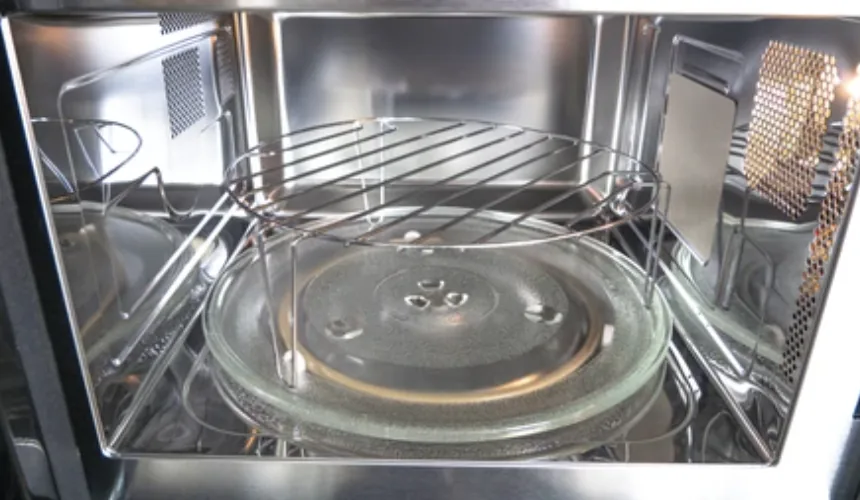
That said, this is another area where manufacturer-specific guidance matters more than a blanket rule. Some specialty cookware brands manufacture hybrid or multi-material products that include specific instructions about microwave compatibility, and a very small number of appliances, such as certain combination microwave-convection ovens, include metal racks or accessories explicitly designed for that appliance’s use.
If a stainless steel item doesn’t come with clear, specific documentation saying it’s safe for your particular microwave, the safest assumption is that it isn’t. Checking the product’s manual or manufacturer website before assuming otherwise is always worth the extra minute, and it’s a useful habit for answering what happens if you microwave metal of any kind, not just stainless steel.
Can You Microwave a Metal Spoon?
A metal spoon left in a bowl of soup before reheating is one of the most common, low-stakes examples of accidental metal-in-microwave situations, and it’s a genuinely useful, everyday illustration of what happens if you microwave metal without meaning to.
Metal spoons and other utensils are generally discouraged in microwaves for the same reasons covered above: the spoon’s handle, especially if it’s thin or has a defined edge, can concentrate electrical charge and spark. Because a spoon is relatively small and often partially submerged in food or liquid, the outcome can vary quite a bit — some people microwave food with a forgotten spoon inside without any visible issue, while others see sparking almost immediately.
That inconsistency isn’t a reason to treat it as fine. It simply reflects how much the outcome depends on the spoon’s shape, position, and the specific microwave being used, which is exactly the kind of variability that makes what happens if you microwave metal hard to predict from one kitchen to the next. The more reliable habit is to remove any metal utensils before microwaving, rather than hoping a particular spoon won’t cause a problem this time.
What About Aluminium Foil?
Aluminium foil deserves its own mention here because it’s one of the most common forms of metal that ends up in a microwave, often wrapped around leftovers or covering a plate. Foil behaves according to the same basic principles discussed throughout this article: it’s thin, easily creased or crumpled, and prone to sparking at its edges and folds when exposed to microwave energy.
Because foil comes with its own set of specific considerations, including a small number of situations where certain manufacturers permit limited use, it’s covered in much more depth in our dedicated article, Can You Microwave Aluminium Foil? If foil is the specific type of metal you’re asking about, that article covers the details more thoroughly than this general overview.
Are There Any Exceptions to the Metal Rule?
The general rule against microwaving metal is a good default, but it isn’t an absolute law of physics that applies identically to every product on the market. A handful of exceptions exist, and they’re worth understanding so you don’t mistake a legitimate manufacturer allowance for a reason to disregard the rule generally.
- Specialized microwave-safe metal accessories. Some combination microwave and convection ovens ship with metal racks or trays specifically engineered and tested for that appliance.
- Manufacturer-approved cookware with metallic elements. Occasionally, cookware brands design products with small metal components rated safe for microwave use, based on their own testing.
- Browning dishes and specialty inserts. Certain microwave browning dishes include a metallic coating on their underside, specifically engineered to get hot for searing purposes, and are designed to handle that interaction safely.
These exceptions exist precisely because someone tested and engineered around the usual mechanics of what happens if you microwave metal, rather than ignoring them. That distinction matters: a manufacturer’s approval reflects real testing specific to that product, not a workaround that applies more broadly to similar-looking items you might have at home.
In every one of these cases, the safety comes from deliberate engineering and testing done by the manufacturer for that exact product, not from any general property of the metal itself. If you’re ever unsure whether something with metal in it is safe for your microwave, the manufacturer’s instructions should always take priority over general assumptions, including the general guidance in this article about what happens if you microwave metal without that kind of specific approval.
What Should You Do If Your Microwave Starts Sparking?
If you’re seeing exactly what happens if you microwave metal firsthand — sparking, flashing, or crackling inside the appliance — a calm, immediate response matters more than panicking.
- Stop the microwave right away using the stop or cancel button.
- Keep the door closed if you see actual flames, since opening it introduces oxygen that can make a fire worse.
- Unplug the microwave if you can safely reach the outlet without opening the door.
- Allow a small, contained fire to burn out inside the closed microwave rather than opening it to intervene.
- Use a fire extinguisher only if flames escape the appliance, and only if it’s safe to do so.
- Never use water on the appliance, since this is an electrical fire risk rather than a typical grease fire.
After the situation is resolved, avoid using the microwave again until you’ve checked for visible damage, such as scorch marks or pitting on the interior walls, since that kind of damage isn’t always obvious from a quick glance.
FAQs on What happens if you microwave metal?
Can metal damage a microwave? Yes. This is one of the more overlooked parts of what happens if you microwave metal: repeated or intense sparking can scorch or pit the interior lining and, in some cases, affect internal components, potentially shortening the appliance’s lifespan.
Why does metal spark in the microwave? Metal is highly conductive, and its electrons respond to the microwave’s electric field. Sharp edges, thin sections, and folds concentrate that charge intensely enough to jump through the air as a visible spark.
Can stainless steel go in a microwave? Generally, no, unless a specific product’s manufacturer explicitly states it’s safe for microwave use. Most stainless steel cookware and containers aren’t designed or tested for it.
Can you microwave a metal spoon? It’s discouraged. A metal spoon can spark, particularly at its edges or handle, even though the outcome isn’t guaranteed every time. Removing utensils before microwaving is the safer habit.
Can metal cause a microwave fire? Yes — can metal catch fire in a microwave is a legitimate concern, though it isn’t automatic. If sparking continues or intensifies near flammable material inside the microwave, it can ignite a small fire.
What should you do if your microwave sparks? Stop the microwave immediately, keep the door closed if flames are visible, and unplug it if it’s safe to do so. Let a small, contained fire burn out inside rather than opening the door — the same calm response applies regardless of exactly what happens if you microwave metal in your specific situation.
What happens if you microwave metal? Conclusion
So, what happens if you microwave metal? In most cases, the honest answer is that you’re introducing a real, if inconsistent, risk of sparking, potential appliance damage, and in some situations, fire. Metal’s conductivity means it interacts with a microwave’s electric field very differently than food does, and sharp edges, thin sections, and folds are what typically turn that interaction into a visible spark.
While a small number of manufacturer-approved products include metal components specifically engineered for microwave use, that’s the exception rather than the rule, and it only applies when the manufacturer’s own instructions say so. For everyday metal items, spoons, stainless steel containers, foil, and anything else metallic, the safest and simplest approach is to keep them out of the microwave entirely. Understanding what happens if you microwave metal is really the first step toward avoiding an avoidable mishap in your kitchen.
You may want to also check out some of the food that you should never put inside a microwave.