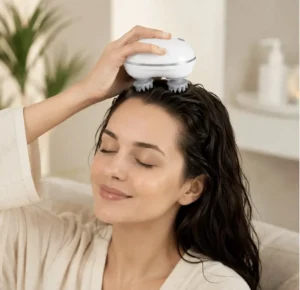
Can You Use a Scalp Massager Every Day? Benefits, Risks and Best Practices
Introduction
Scalp massagers have become a fairly common addition to hair-care routines, whether it’s a simple handheld silicone tool or a more elaborate electric device. Once you’ve got one in your shower caddy or on your nightstand, the obvious next question is how often you should actually be using it.
Can you use a scalp massager every day? For most people, yes, as long as the pressure stays gentle to moderate and the device is used sensibly. Daily use isn’t inherently risky, but “daily” and “aggressive” are two very different things, and the difference between them is really what determines whether a scalp massager helps your routine or works against it.
This guide covers what daily scalp massager use actually looks like, the realistic benefits and potential downsides, how manual and electric options compare, and when it’s worth being more cautious with this kind of device. Along the way, we’ll also look at how session length, product use, and even combination devices like red-light-and-massage tools fit into a sensible everyday routine.
Can You Use a Scalp Massager Every Day?
The direct answer is that daily use is generally fine for most people, but frequency alone isn’t the whole picture. How often you can comfortably use a scalp massager depends on the device itself, the pressure you’re applying, and how your individual scalp responds over time.
A few things shape what “every day” reasonably looks like:
- The device. A soft silicone hand tool applies gentler, more adjustable pressure than a firm-bristled electric massager, which means the two aren’t necessarily interchangeable in terms of how often they should be used at full intensity.
- The pressure setting. Many electric scalp massagers offer multiple intensity levels. Daily use at a low or moderate setting is a very different experience than daily use at the highest setting available.
- Your scalp’s individual response. Some people have more sensitive skin or thinner hair and may notice irritation sooner than someone with a more resilient scalp. There’s no single frequency that’s correct for everyone.
In practice, this means “every day” is a reasonable target frequency, but the details, pressure, duration, and how your scalp actually feels afterward, matter just as much as the number of days per week.
Is Daily Scalp Massage Good for Your Scalp?
Used sensibly, daily scalp massage offers a handful of genuine, realistic benefits, even if it isn’t a cure-all.
- Relaxation. A few minutes of gentle massage can be a simple, calming part of a daily routine, similar to any other short mindfulness habit.
- Reduced scalp tension. Many people carry tightness in the scalp and surrounding muscles without realizing it, and gentle massage can offer temporary relief from that tension.
- A more consistent hair-care routine. Adding scalp massage to washing, oiling, or applying products can make an existing routine feel more deliberate, which sometimes translates into better overall consistency.
- Mechanical stimulation of the scalp. Some limited research suggests that regular mechanical stimulation may support a healthier scalp environment over time, though this is an area where the evidence is still fairly early.
It’s worth keeping expectations grounded here. Daily massage is a reasonable, low-risk habit that can genuinely improve how your scalp feels day to day. It isn’t a guaranteed treatment for any specific hair or scalp condition, and it shouldn’t be treated as one.
It also helps to separate how a massage session feels in the moment from what it does over the longer term. The immediate sense of relaxation and reduced tightness is something most people notice right away. Any broader change to scalp health or hair over weeks and months is a slower, less certain process, and it’s the part of the equation that’s easiest to overestimate.
What Happens If You Use a Scalp Massager Too Often?
“Too often” is really more about intensity and technique than the calendar, but overuse in any form can lead to a few consistent problems.
- Irritation. Repeated pressure, especially at a high setting, can leave the scalp feeling inflamed or overworked, sometimes with visible redness.
- Tenderness. A scalp that feels sore to the touch, particularly the day after use, is a sign that the pressure or duration was more than the skin could comfortably handle.
- Excessive pressure. Pressing a device firmly into the scalp, beyond what feels like a pleasant, therapeutic sensation, doesn’t add extra benefit and increases the risk of soreness or bruising in more sensitive areas.
- Scratching or pulling. Bristled or textured attachments used too aggressively can catch and pull at hair strands, which may contribute to unnecessary breakage over time, separate from any effect on the follicle itself.
None of this means scalp massagers are risky when used reasonably. It simply means that more isn’t automatically better, and paying attention to how your scalp feels is a better guide than assuming daily use at maximum intensity is the goal.
A simple way to check in with yourself is to notice how your scalp feels the following morning. Mild relaxation or a pleasant, slightly refreshed feeling is a good sign. Ongoing tenderness, tightness, or discomfort that lingers well past the session itself is a cue to scale back, whether that means lowering the intensity, shortening the session, or spacing out use for a day or two.
How Long Should You Use a Scalp Massager Each Day?
For most devices and most people, somewhere around three to five minutes per session is a practical, commonly recommended range. This is generally enough time to cover the scalp thoroughly without tipping into the kind of prolonged pressure that raises the risk of irritation.
A few practical guidelines:
- Start shorter if you’re new to it. A couple of minutes is a reasonable starting point, especially with an electric device, so you can gauge how your scalp responds before extending the session.
- Follow the manufacturer’s instructions. Devices vary in intensity, motor strength, and attachment design, and the manufacturer’s guidance for your specific product should take priority over any general recommendation, including this one.
- Don’t chase a longer session assuming it’s more effective. Once you’ve covered the whole scalp at a comfortable pace, additional time isn’t known to meaningfully add to the benefit.
If you’re ever unsure what’s appropriate for your specific device, checking the included instructions or the manufacturer’s website is more reliable than guessing.
Manual Scalp Massage vs Electric Scalp Massager
Both approaches can fit into a daily routine, and the right choice often comes down to personal preference rather than one being objectively superior.
| Factor | Manual Massage (Fingers or Handheld Tool) | Electric Scalp Massager |
|---|---|---|
| Cost | Free (fingers) or low-cost (simple tools) | Generally higher upfront cost |
| Pressure control | Highly adjustable, moment to moment | Fixed intensity settings, often multiple levels |
| Consistency | Depends on personal habit and effort | Often more standardized session to session |
| Convenience | Always available, no charging or setup | Requires charging or batteries, plus upkeep |
| Coverage | Can be uneven, especially with thick hair | Often more even across the scalp in one pass |
| Fatigue | Can tire your hand during longer sessions | No hand fatigue involved |
| Best for | Those who prefer full control and simplicity | Those who value convenience and consistency |
Neither option is inherently better for outcomes, since the underlying idea, mechanical stimulation of the scalp, is similar either way. The more meaningful difference is which approach you’re actually likely to stick with consistently.
Some people also find it useful to mix the two: fingers for a quick daily touch-up, and an electric device for a more thorough session a few times a week. There’s no rule against combining approaches, as long as the total daily pressure and duration stay within a comfortable range rather than stacking two intense sessions back to back.
Can You Use a Scalp Massager With Hair Serums or Oils?
Yes, many people use a scalp massager alongside oils, serums, or other leave-in products as part of the same routine, though a few practical considerations are worth keeping in mind.
- Check the product’s own instructions first. Some serums or treatments include specific application guidance, and it’s worth following that over general assumptions about how massage might affect absorption.
- Silicone tools are generally easy to clean after oil use, while some electric devices with motors or electronic components may need more careful handling to avoid getting oil into moving parts or charging ports.
- Massage doesn’t need to be treated as a requirement for a product to “work.” Combining the two is mostly a matter of convenience and routine-building, not a guarantee that massage meaningfully changes how a product performs.
If you’re combining a scalp massager with a specific product, following that product’s instructions, alongside your massager’s manufacturer guidance, is the safest approach rather than assuming compatibility.
Order of application can also make a practical difference. Some people prefer to apply an oil or serum first and then use the massager to help distribute it more evenly across the scalp, while others massage dry and apply products afterward. Neither order is inherently correct, and the better choice usually comes down to what feels most comfortable and what the specific product recommends. If a product warns against combining it with additional friction or heat, that guidance should take priority over general habit.
Can a Scalp Massager Help Hair Growth?
This is worth addressing carefully, since it’s often the underlying question people have in mind when they start using one of these devices in the first place.
The honest answer is: possibly, in a modest and still fairly limited way, but it isn’t a proven hair-growth treatment. The research most often cited in this area involved a small number of participants using standardized scalp massage over several weeks, and it found a measurable increase in hair thickness, though notably not a significant change in hair growth rate itself. That’s an interesting, genuinely useful data point, but it’s far from a large-scale, conclusive body of evidence, and it doesn’t support claims that a scalp massager reliably regrows hair or reverses hair loss.
A scalp massager for hair growth is more accurately described as a low-risk, potentially supportive addition to a hair-care routine than a proven solution. If your main goal is genuinely addressing hair loss or significant thinning, a scalp massager shouldn’t be relied on as a standalone answer.
It’s also worth separating cause from correlation here. People who use a scalp massager regularly often also pay closer attention to their hair care overall, better product choices, more consistent washing habits, or simply more awareness of changes in their hair. Any improvement someone notices could reasonably come from that broader shift in attention, not the massage itself. That’s not a reason to dismiss the practice, but it’s a reason to hold the claim loosely rather than treating a scalp massager as the single explanation for any change you see.
What About Scalp Massagers With Red Light Therapy?
Some scalp devices now combine massage with red light therapy, a separate technology that uses specific light wavelengths and has its own, more established body of research related to hair density in certain types of hair loss.
The logic behind combining the two is straightforward: rather than running separate routines for mechanical stimulation and light exposure, a single device handles both in one session. Whether this specific combination performs better than either technology used on its own hasn’t been extensively studied as a pairing, so it’s reasonable to view it as a convenient way to streamline a routine rather than a scientifically confirmed multiplier of results.
For readers interested in how this kind of combination device performs in practice, our review of the ROVAY Red Light Therapy Brush covers how it handles massage and light therapy together, including its intensity settings and everyday usage.
Who Should Be More Careful With Scalp Massagers?
While scalp massagers are low-risk for most healthy adults, a few situations call for extra caution or a conversation with a healthcare provider before regular use.
- A sensitive or already irritated scalp. If your scalp is prone to flare-ups, sensitivity, or existing irritation, mechanical pressure could make that discomfort worse rather than better.
- Open wounds or broken skin. Applying a massager directly to any open cut, sore, or irritated patch isn’t advisable, since it can delay healing or introduce further irritation.
- Unexplained scalp pain. Pain that doesn’t have an obvious cause is worth having evaluated rather than worked around with continued massage.
- Diagnosed scalp or skin conditions. If you have a dermatological condition affecting your scalp, checking with a healthcare provider before adding regular mechanical stimulation is a reasonable precaution.
None of this is meant to diagnose any particular situation. It’s simply a reminder that a scalp massager is a wellness tool, not a substitute for professional care when something feels genuinely off rather than routinely tight or tense.
If you’re generally healthy and your scalp doesn’t fall into any of these categories, there’s no need to overthink daily use. The precautions above are meant for specific, identifiable situations, not a reason for the average person to be hesitant about a low-risk habit.
FAQs
Can I use a scalp massager every day? Yes, for most people, as long as the pressure is gentle to moderate and the scalp isn’t showing signs of irritation. Daily use is generally considered safe when it’s done sensibly.
How often should you use a scalp massager? Daily or near-daily, for a few minutes at a time, is a reasonable, commonly recommended frequency, though four to five times a week works just as well if daily use isn’t practical.
Is an electric scalp massager better than a manual one? Not definitively better, just different. Electric scalp massagers often offer more consistent pressure and convenience, while manual massage offers more direct control. Both can be effective as part of a regular routine.
Can scalp massage every day cause hair damage? Gentle massage is generally low-risk. Aggressive pressure, scratching, or pulling at the hair during use could plausibly contribute to breakage, so a gentle approach is the safer choice.
Does a scalp massager actually help with hair growth? It may offer modest support as part of a broader routine, based on limited early research, but it isn’t a proven standalone treatment for hair loss or thinning.
How long should each scalp massage session last? Around three to five minutes is a practical, commonly recommended range, enough to cover the scalp without over-massaging any one area.
Can you use a scalp massager on wet hair? Many people do, often in the shower, and some devices are specifically designed for this. If you’re using an electric massager, check that it’s rated as water-safe before using it wet, since not all electronic devices are built for that kind of exposure.
Conclusion
So, can you use a scalp massager every day? For most people, yes, daily use is a reasonable and generally low-risk habit, as long as the pressure stays gentle to moderate and you’re paying attention to how your scalp actually feels. What matters more than hitting an exact frequency is consistency, a comfortable technique, and realistic expectations about what a scalp massager can and can’t do.
Treat it as a relaxing, low-risk addition to your hair-care routine rather than a guaranteed fix for hair loss or thinning. If you’re dealing with a sensitive scalp, unexplained pain, or noticeable hair changes, it’s worth easing off and checking in with a healthcare professional rather than relying on daily massage alone to sort things out.